Structural Drying in Lake Elsinore, CA
Drying a house is not the same as drying the floor. Structural drying pulls water out of framing, slabs and wall cavities with LGR dehumidifiers, air movers and daily readings, and the equipment stays until the numbers match a dry reference.
(888) 450-9281Dry the framing, slab and walls properly in Lake Elsinore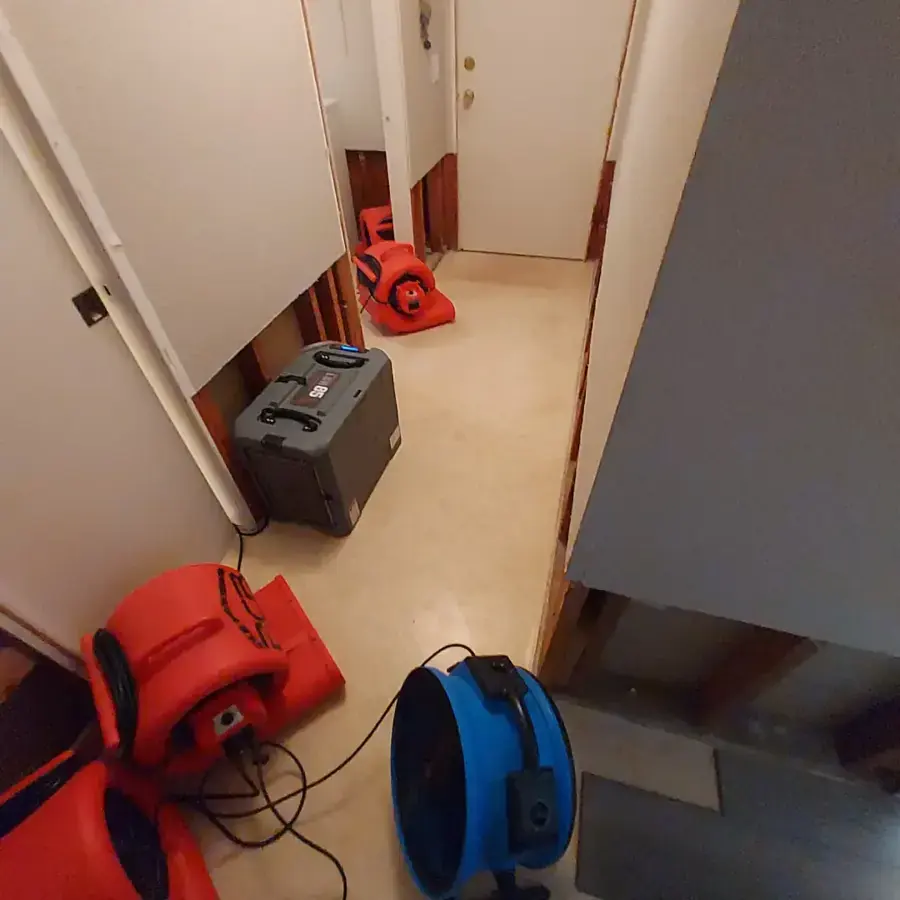
First steps for structural drying in Lake Elsinore
- 1
Keep windows closed on humid days
Let the dehumidifiers control the air.
- 2
Leave equipment running
Switching it off at night resets the drying.
- 3
Keep doors to the drying area closed
The drying team sets the containment for a reason.
- 4
Move belongings out of wet rooms
Air needs to reach the walls and floor.
- 5
Note any new stains or smells
Tell the drying team at the next reading.
How structural drying is handled in Lake Elsinore
- L1
Moisture map
Readings on every wet material and a dry reference.
- L2
Equipment sizing
Air movers and dehumidifiers matched to class and room size.
- L3
Daily psychrometrics
Temperature, humidity and material readings logged.
- L4
Dry verification
Equipment out when materials read within a few points of dry.
What does structural drying cost in Lake Elsinore, CA?
In Lake Elsinore, CA, structural drying typically runs $1,000 to $6,000 or more, depending on the number of rooms, the class of loss, the materials involved and how many days the equipment has to run.
- Air movers
- One LGR dehumidifier
- Daily readings
- Multiple dehumidifiers
- Cavity drying
- Psychrometric logs
- Desiccant dehumidifier
- Hardwood or slab mats
- Longer drying
Every loss is different, so treat these as typical ranges, not a quote. The water damage cost calculator gives a closer planning range for your own rooms.
After the standing water is gone, most of the water in a loss is still in the building: in the drywall, the bottom plates, the subfloor and the slab. Structural drying is the phase that removes it. The IICRC S500 standard lays out how it is done, and the principle is simple: remove water from materials, then remove that water from the air, and keep going until measurements say the job is finished.
How a drying plan is built
- Moisture mapping records which materials are wet and how wet
- The class of loss, 1 through 4, sets how much equipment a room needs
- Air movers are placed to keep air moving across wet surfaces
- LGR dehumidifiers pull the evaporated water out of the air; desiccants handle Class 4 materials like hardwood and dense concrete
- Wall cavities get injectors or small access holes rather than full tear-out when the drywall is sound
Readings, every day
The drying team logs temperature and humidity inside the drying area and outside it, and takes moisture readings on the wet materials. Those psychrometric readings show whether the equipment is removing water or just moving it around. Equipment gets added, moved or removed based on the numbers. Lake Elsinore's dry summer air helps outdoor drying, but a closed house on a hot day can still trap humid air, which is why the dehumidifiers do the real work.
A contained Class 1 loss usually dries in three to five days. Hardwood, plaster, thick slabs and Class 4 materials take longer. Equipment stays until the readings say dry, not until a date on the calendar.
Why it matters for the claim and for mold
The drying logs are proof that the structure was dried to a standard before anything was closed up. Adjusters look for them. The EPA mold guidance explains why materials that stay wet past 24 to 48 hours risk growth, and the OSHA flood cleanup page covers the safety side of wet structures. For the step before drying, see water extraction.
Structural drying across the Elsinore Valley
The restoration team handles structural drying in Lake Elsinore, Lakeland Village, Wildomar, Canyon Lake, Menifee, Temescal Valley and Horsethief Canyon, from the lakeshore flats to the canyon neighborhoods on the hills.
ZIP codes 92530, 92531 and 92532, plus Wildomar, Canyon Lake and Menifee.
Every area and ZIP code coveredStructural Drying and Dehumidification questions, answered
What is structural drying?
It is the phase that removes water from framing, subfloors, walls and slabs after the standing water is gone, using dehumidifiers, air movers and daily readings to a standard.
What does IICRC S500 mean?
It is the industry standard for professional water damage restoration. It covers how losses are classified, how drying is done and how it is verified.
Why can't I just use box fans?
Fans move air but do not remove water from it. Without dehumidification, the water evaporates into the house air and soaks back into drywall and furniture.
How is dry actually measured?
Wet materials are compared with the same material in an unaffected part of the house. Drying is done when they read within a few points of that dry reference.
Can I turn the equipment off at night?
It is best not to. Drying depends on steady conditions, and switching off lets humidity climb back up.
How long does drying take?
Three to five days is typical for a contained loss. Hardwood, plaster and slabs take longer. The readings decide.
What are Class 1 through 4?
The class describes how much water was absorbed and how hard the materials are to dry, from a small area of low-porosity material (Class 1) to dense materials like hardwood and concrete (Class 4).
Need a Lake Elsinore home dried properly?
The drying team sets LGR dehumidifiers and air movers to the moisture map and logs readings until the goal is met.